The short answer
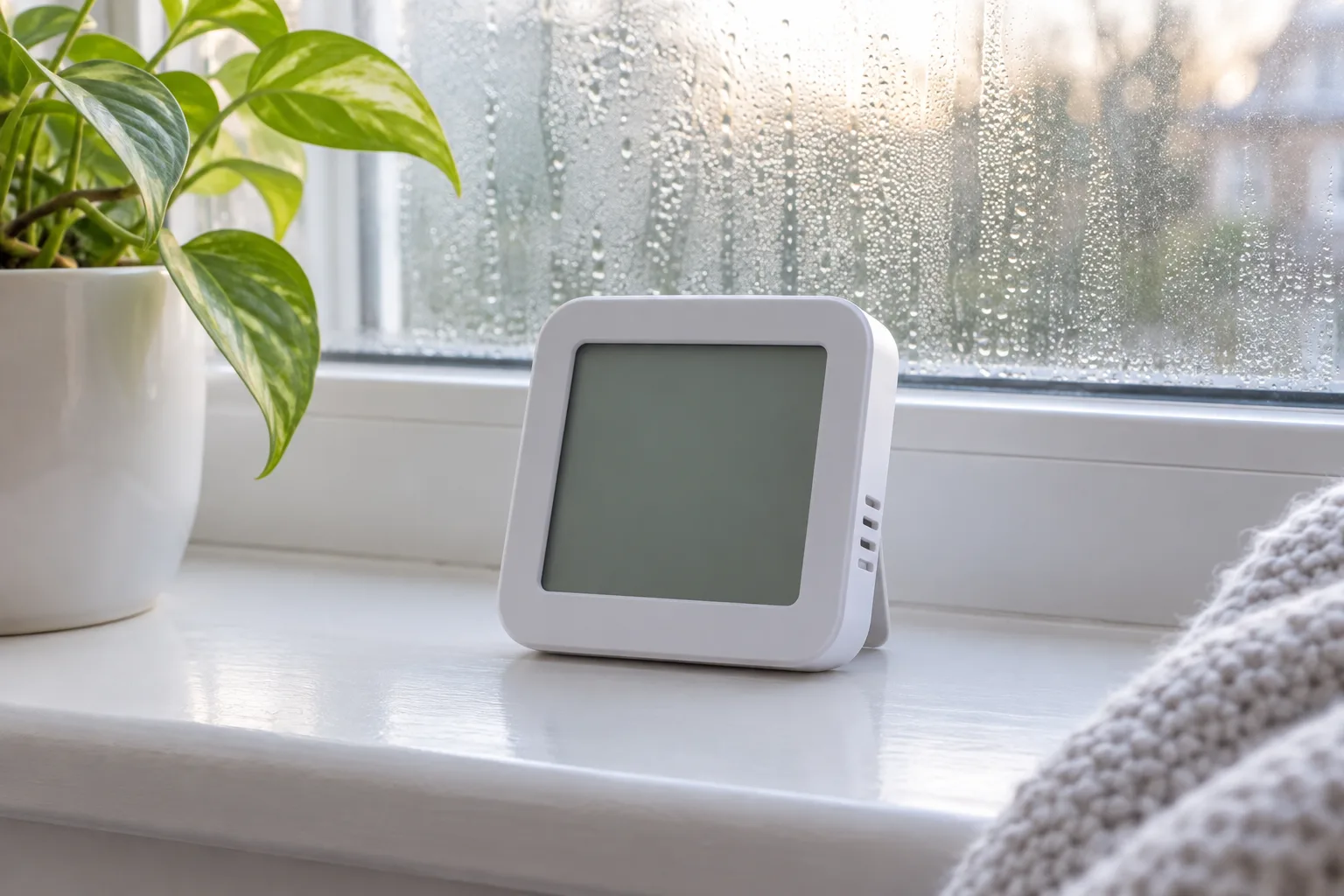
A humidity sensor (also called a hygrometer) measures how much moisture is in the air as a percentage, called relative humidity. It can't see mould, but it shows you when the air in a room stays damp enough for condensation and mould to start, so you can open a window, use the extractor or run a dehumidifier before the black spots appear.
The habit that works: put one in the room that worries you, usually a bedroom or a box room with an outside wall, and look at it in the morning and evening for a couple of weeks. Short peaks are normal. Readings that stay high for hours, night after night, are the warning sign.
Why damp and mould matter
Damp and mould aren't only about stained walls. UK government guidance, Understanding and addressing the health risks of damp and mould in the home, says damp and mould mainly affect the airways and lungs, and can also affect the eyes and skin. It says everyone can be affected, but people with certain health conditions, children and older adults are at greater risk.
The NHS lists babies and children, older people, people with skin problems such as eczema, people with breathing problems such as asthma or allergies, and people with a weakened immune system as more sensitive to damp and mould.
A sensor helps you manage the air in your home. It isn't medical advice. If you're worried about symptoms, speak to your GP or call NHS 111.
What the humidity numbers mean
There's no single official figure for homes, but the figures used by councils and building professionals are consistent. Waverley Borough Council's damp and mould leaflet, for example, says people are most comfortable with relative humidity between 30% and 60% at 18 to 25°C, and that mould needs humidity above 70% for some time before it starts to grow. Many guides use 40% to 60% as a sensible everyday aim.
| Reading | What it usually means | What to do |
|---|---|---|
| Below 40% | Dry air, common with the heating on full | Nothing urgent. Dry eyes or throat? Ease off the heating a little |
| 40% to 60% | Comfortable | Carry on |
| 60% to 70% | Getting damp | Ventilate after cooking, showers and drying clothes |
| Above 70% for hours | Condensation and mould risk | Find the source; ventilate, heat and dry the air |
Temperature matters too. Cold walls and windows are where moisture condenses, so a room at 14°C with 65% humidity can still get mould in the corners, while a warm room at the same reading may not. That's why many sensors show temperature as well.
Don't chase the exact number. Cheap sensors can read a few per cent apart. Put two side by side for an hour to see how they compare, then watch the trend rather than the decimal point.
Where to put a humidity sensor
- In the room you're worried about. Bedrooms are the usual problem: two people breathing all night with the door and window shut add a lot of moisture.
- On an inside wall, about chest height. This gives a fair reading for the room.
- Not on the windowsill, by a radiator or in direct sun. These read much colder, warmer or wetter than the room.
- Not next to the kettle, cooker or shower. You'll only measure steam. In kitchens and bathrooms, put it across the room and look at how quickly the reading falls afterwards.
- A second sensor near the problem corner (behind a wardrobe, on an outside wall) can show that spot is colder and damper than the rest of the room.
Smart humidity sensor or a simple hygrometer?
| Simple digital hygrometer | Smart (app connected) sensor | |
|---|---|---|
| Cost | A few pounds | More, and many need a hub |
| Shows | Now, sometimes the day's high and low | Now, plus a history graph on your phone |
| Alerts | No | Yes, when it passes a level you set |
| Can switch things on | No | Often, with a smart plug: for example a dehumidifier |
| Best for | A quick check in each room | A room with a real problem, or a home you're away from |
The history is the useful part of a smart sensor. A graph showing a bedroom above 70% every night for a month tells you far more than a single reading, and it's clear evidence if you need to raise damp with a landlord.
We stock thermometer hygrometers and smart sensors on our smart sensors page.
How to bring the humidity down
The government guidance's advice for tenants includes cooking with pan lids on, keeping internal doors shut when cooking and bathing, drying laundry outdoors where possible and opening windows from time to time. Other everyday steps:
- Use the extractor fan while cooking or showering, and leave it running for a while after.
- Open a window a little in the bedroom for a few minutes in the morning, or keep trickle vents open.
- Keep furniture a few centimetres off outside walls so air can move behind it.
- Heat the home steadily. Low, steady heat keeps walls warmer than short blasts.
- Dry clothes with care. If they have to dry indoors, put them in one room with the door shut and a window open or a dehumidifier running.
- A dehumidifier helps in rooms that stay damp. Pair it with a smart plug on a timer, or with a smart sensor that switches it on above a level you choose. Check the dehumidifier turns itself back on when its power returns; some need a button pressed.
Smart plugs for a dehumidifier are on our smart plugs page. Check the plug's maximum load against the dehumidifier's wattage.
If you rent: damp is the landlord's problem to fix
Condensation from daily life is something everyone manages, but damp caused by leaks, broken extractor fans, poor insulation or a faulty damp proof course is a repair. The government guidance makes clear that landlords must deal with the underlying causes, not just ask tenants to wipe the mould away.
- Social housing: since 27 October 2025, Awaab's Law requires social landlords in England to investigate and fix significant damp and mould hazards within set timescales.
- Private renting: report damp to your landlord in writing. If nothing happens, your local council can inspect.
A few weeks of sensor readings, with dates, alongside photos of the mould, make a clear and calm report.
How we chose
This guide is advice rather than a product round up. Health and housing points come from the UK government guidance and the NHS, linked above. We only add product cards to our guides where our delivered price is within 15% of the lowest delivered price we can find at other UK shops, so there are no product cards here: any sensor that shows humidity and keeps a history will do the job. Browse the range in our smart home section.
Frequently asked questions
What humidity causes mould?
Mould usually needs humidity above about 70% for a sustained period, especially on cold surfaces. Short spikes after a shower or cooking are normal if they fall back within an hour or so.
What is a good humidity level for a bedroom?
Roughly 40% to 60% is comfortable. Bedrooms often rise overnight with the door and window closed; if they stay above 70% for hours every night, ventilate more or use a dehumidifier.
Where should I put a humidity sensor?
On an inside wall at about chest height, away from windows, radiators, direct sun, kettles and showers. A second sensor near a problem corner can show if that spot is colder and damper.
Are cheap hygrometers accurate?
Accurate enough to show trends. Cheap sensors can read a few per cent apart, so compare two side by side and watch the pattern over days rather than one exact figure.
Does a dehumidifier stop mould?
It lowers the humidity, which makes mould less likely, but it doesn't fix a leak, a cold wall or a broken extractor. Clean existing mould safely and deal with the cause.
Can a smart sensor turn on a dehumidifier?
Yes, many smart sensors can switch a smart plug when humidity passes a level you set, though some need a hub. Make sure the dehumidifier restarts by itself when its power comes back on.